Thursday, September 2, 2010

Writing, Civilization, and History


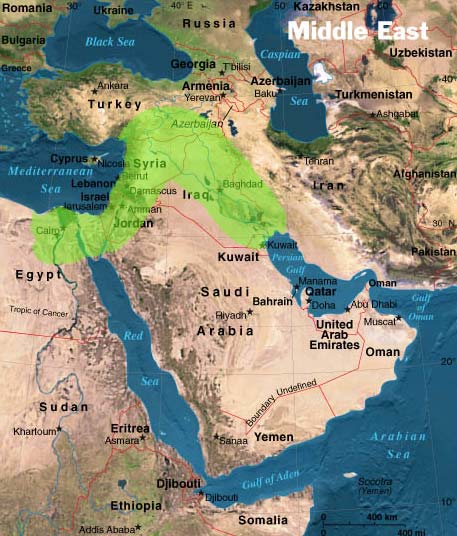
Early Sumerian Civilization--there was no country named Sumer; rather,  it was a collection  of substantial cities--city-states, in modern usage--that shared a common language and cultural traits.

A. Growing grain

1. Barley--Sumerians came to favor growing barley, because it was more resistant to the increased salinity of the soil that occurred because of the irrigation that had to be used in the increasingly arid region.

2. Malted barley--whether as an attempt to soften the tough barley kernel, or by accident, Sumerians discovered that wetting the barley kernels caused them to sprout, and activated the conversion of the starch within the kernel to begin to convert into sugar--the process of which they could stop by heating the kernels in an oven. This process brewers call malting.

3. Boiling the wort--boiling the malted barley allowed the Sumerians to extract much of the sugar from  the  barley that had been created in the malting process.

4. Fermentation--allowing the wort to cool in large open vessels permitted wild yeasts to settle in the concoction, consume a significant portion of the sugar, and convert that sugar into alcohol. Sumerians also discovered that by using the same vessels multiple times, they could obtain more predictable results (the yeast became cultivated).

5. Uses--beer (and its antecedent mead) became a staple in the diets of peoples throughout Eurasia. In the days before sanitation, it was a way of ensuring  that what you were drinking was relatively free of  harmful microbes--plus  beer retains a portion of the nutritional value from the grain that it is made from.  In addition, becoming inebriated consuming beer helped to the edge off a harsh existence.

B. Writing--earliest writing largely consisted of pictographs--pictures that represented things. As communication became more sophisticated and complex, cultures used these pictures to represent sounds, and many simplified their pictures to more symbolic representations of these sounds--what we today throughout much of the West call "the alphabet" and  phonics. Cultures in the East, particularly in China, continued to use abstract pictographs for this purpose.

1. Accounting--Early Sumerians, after placing grain in a sack, would tie it closed, work a ball of clay around the knot, and then press a seal they had made into the clay. When the clay hardened, the design  of the seal signified that they were the owners of the grain in the sealed sack. In addition, Sumerians also kept circular pieces of clay called "counters" to account for goods--like cattle. As some Sumerians became more wealthy, they would keep these counters sealed within another clay container, and it was necessary to account on the outside of the container (because clay is opaque and not easily reusable once it is opened. As trade became more complex, it became necessary to begin using more simplified symbols to designate what was being traded--plus, clay is a difficult medium to draw on, anyway. In addition, as communication became more complex, the symbols for things began to become symbols for sounds.

1. Egyptian hieroglyphics--seems to have developed independently, although they do seem to have borrowed some elements from their neighbors to the northeast. For Egyptians, however, writing had a higher power than merely counting possessions--writing had the power to bestow immortality (which is why all Egyptian kings had  their names put on their tombs and other monuments). Because of the power of writing, the priest class in ancient Egypt kept the meaning of the hieroglyphs a secret among themselves, which is why they were a mystery to modern people until the discovery of the Rosetta Stone. A simplified hieroglyph system came to be used in ancient Egypt for everyday communication, and is the basis for the English alphabet that we use in the United States today.

2. Chinese writing--rather that developing a phonic system like that in the West, China (and those countries in Asia influenced by Chinese culture) retained a greater pictograph element in their writing.

C. The Creation of the Epic

1. Gilgamesh--one of the earliest epic stories tells the story of a Sumerian king by the name of Gilgamesh. Although much of the story verges on mythology (and was created  to ensure loyalty to Gilgamesh, and to ensure his legacy--much as leaders of countries today attempt to craft the story of their own time in power), it can be a valuable tool for historians, as well.

Tuesday, August 31, 2010

Domesticating Animals and Disease


The independent evolution of farming and the domestication of animals has contributed greatly to the uneven development of civilization across the globe. This is not meant to suggest that humans in areas of the globe that experienced a slower growth of civilization (the growth of urban areas and arts and crafts  associated with this development); indeed, human beings have shown remarkable adaptability in working with the limitations that geography and climate impose upon them. The remarkable complexity of the Agricultural Revolution is demonstrated in this video.

The domestication of plants was usually a hit and miss proposition, and most of probably began as the cultivation of wild plants that by irrigation and accident became domesticated. Horticulture and husbandry (the domestication of animals) grew together; the domestication of bovine animals like oxen and cows eventually permitted humans to attach plows to them, and pull these through fields. This allowed humans to further intensify agriculture--that is, to grow the same amount of food within a smaller  area. The intensification of food production is what permitted agriculture to become more attractive to large numbers of human beings around 7000 to 10,000 years ago, because this intensification allowed other human beings to devote their time to perfecting crafts, arts, and social practices (like religion) that enriched the societies that they were forming.

The domestication of animals and the development brought unintended consequences as well, of course--and not all of them have been beneficial to man. Chief among them are the development of virulent diseases like pox, plague, and influenza--all of which humans only developed after domesticating animals. Cattle, pigs, and chickens all are afflicted with diseases that are easily transmitted to humans. With humans also living in cities, in close proximity to one another, they can then transmit these diseases to each other. In addition, humans create a great deal of waste, from the food they consume (both excreted and the waste that is not consumed and disposed of as garbage) that animals like mice and rats are willing to consume. The fleas these small animals are host to transit disease, as well.


This bit of video comedy is, of course, played for laughs,  but has certain truths about living in early cities, as well. The early undertaker knows that the appearance of someone "without shit all over him" means that he is someone of importance (the mythical King Arthur), because people disposed of their waste by simply throwing it out in the streets (it's how archeologists are able to find it). By creating these pathogens, humans living with these domesticated animals often shortened their own lives--but the eventually allowed their descendants to develop immunities and resistance to these diseases, and to pass these diseases along to people who had not developed these immunities.

The point to take away from this discussion is, I think, that civilization, while it does provide great benefits to mankind (in my own self interest, I would not have a job teaching history without it), those benefits come at great costs--both in personal freedom for individuals, and to the environment. Try to keep this in mind  as we explore the evolution of human society in the coming months.

Blogger template 'Fundamental' by Ourblogtemplates.com 2008.

Jump to TOP

Blogger templates by OurBlogTemplates.com